Keep heart failure patients out of hospital.
XAKR listens to the heart and reads the ECG at home, every day, so the care team can act weeks before a patient needs a hospital bed.
In development. Not available for sale.
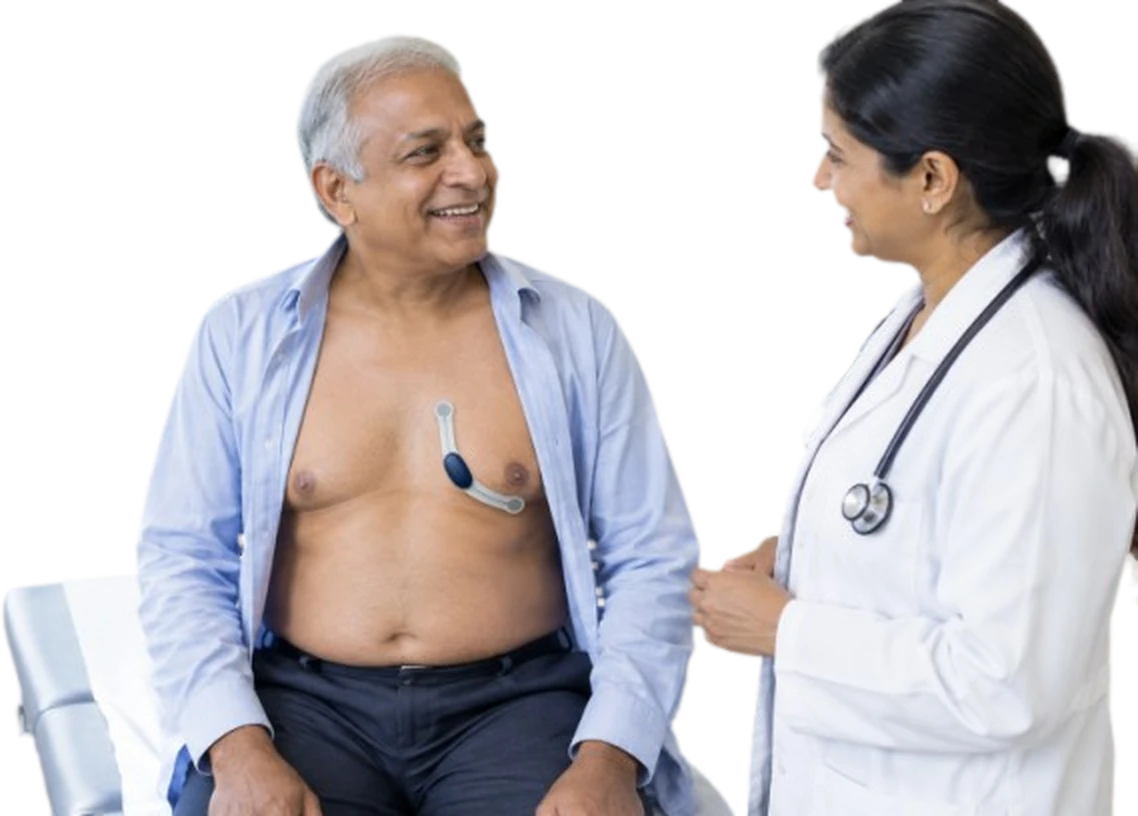
Fluid builds while patients feel fine.
In a weak heart or a stiff heart (HFrEF or HFpEF), congestion builds quietly. By the time the patient is breathless, it is usually an admission.
 Design concept
34days
median warning before a heart failure event, from heart sounds and other signals recorded by implanted cardiac devices.
Published research by others. XAKR is being built to capture the same signal from a wearable.
Heart failure events picked up in advance.
XAKR brings that signal to a wearable. No implant, no surgery.
Wear it. It listens. The care team acts.
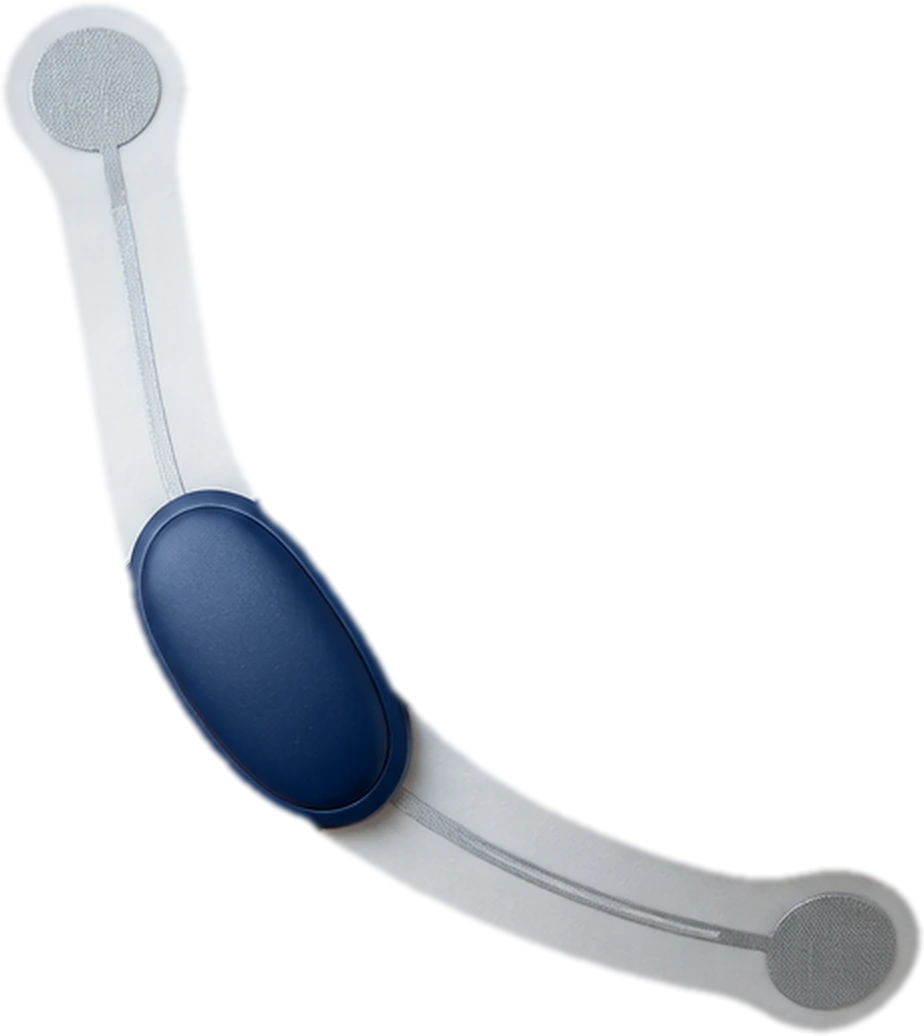
Wear
A small pod on a flexible printed sticker, worn on the chest at home.
Listen
Heart sounds and ECG on one clock: S3, electromechanical timing such as EMAT, and heart rate, every day.
Alert
TreBle AI on the phone tracks change from the patient's own baseline and alerts the care team.
Sound and ECG on one clock.
Our first working prototype, recording a healthy volunteer at home. Every heartbeat is lined up across sound and ECG, and the timing between them is measured beat by beat.
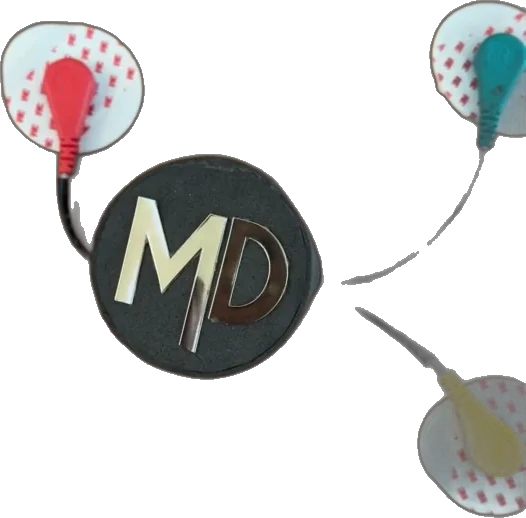
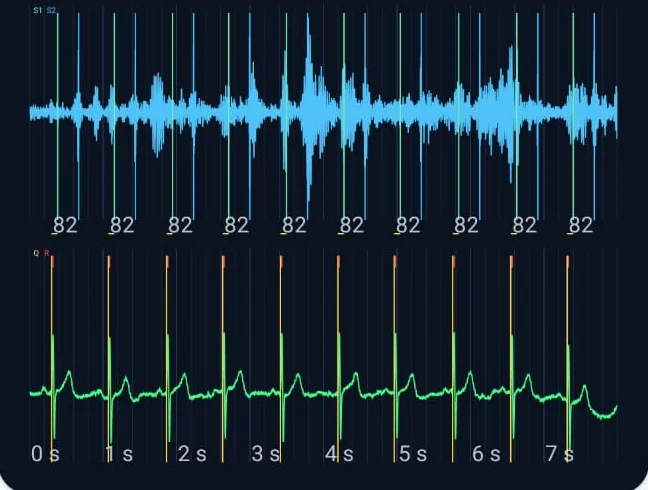
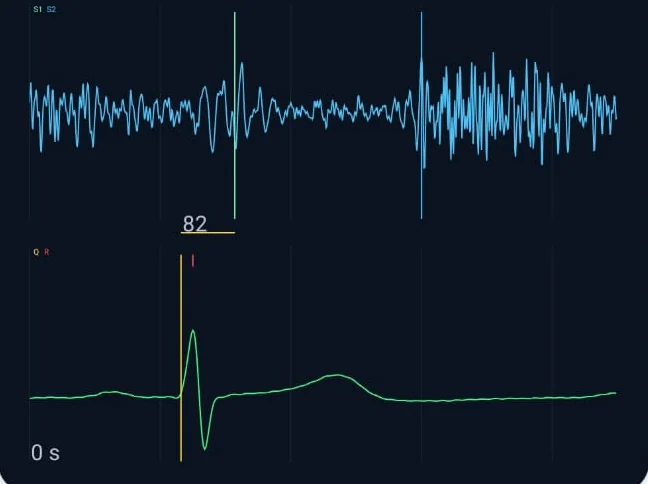
Prototype, 22 November 2026. The final XAKR is a sealed pod on a printed sticker. Not a medical device. Not for patient use.
Powered by TreBle. Already in clinics.
XAKR feeds the same TreBle AI that runs on the TAAL digital stethoscope, offline, in the hands of doctors, nurses and health workers.
XAKR is being developed as part of KUMIHIMO Tech Camp Singapore 2026, Murata's co-creation programme.
From prototype to patients by 2028.
Build it with us.
- Hospitals and cardiology teams. Join the heart failure study and early pilots.
- Industry partners. Sensors, manufacturing and distribution.
- Investors. Talk to us about the programme.
Prefer to talk? +91-9620197043 · WhatsApp
[1] Boehmer JP, et al. A multisensor algorithm predicts heart failure events in patients with implanted devices: results from the MultiSENSE study. JACC Heart Fail. 2017;5(3):216-225. PubMed 28254128
[2] Abraham WT, et al. Intrathoracic impedance vs daily weight monitoring for predicting worsening heart failure events: results of the Fluid Accumulation Status Trial (FAST). Congest Heart Fail. 2011;17(2):51-55. PubMed 21449992